
New Braunfels, Texas · Cracks
Foundation Crack Repair in New Braunfels, TX
Cosmetic or a sign of movement? How to tell, and how each one gets fixed.
Foundation crack repair starts with one question: is the crack cosmetic, or a sign the house is moving? A cosmetic crack can be sealed. A crack from movement needs the cause fixed first, or it opens right back up.
Tell us what you're seeing
- Free inspectionIt costs nothing
- No obligationStopping after the inspection is fine
- Town-by-town soil dataFrom the USDA soil survey
- You never pay usNo fee for using this site
- Call (830) 500-5898Or send the short form
Most of New Braunfels is young, with a median build year of 2005, so this may be the first crack your house has shown. The good news comes from the guidelines Texas engineers use: most cracks don't harm a foundation's strength.
Signs a Crack Is Cosmetic or Structural
A crack's details should guide any judgment about it, say the Texas guidelines and HUD's guide to inspecting homes. Four kinds turn up most:
1. Hairline cracks in drywall or plaster. HUD's inspection guide ties most wall and ceiling cracks to settlement, warping framing or small seasonal movement. A thin crack that doesn't grow is usually cosmetic.
2. Stair-step cracks in brick or stone. These follow the mortar joints in a rough diagonal. HUD says cracking is most likely at corners and next to openings. A stair-step crack that's wider at one end is worth a closer look, because HUD links tapered cracks to faster settlement.
3. Diagonal cracks from the corners of doors and windows. These are often the first to show. One small crack may mean little; several in one part of the house may point to movement.
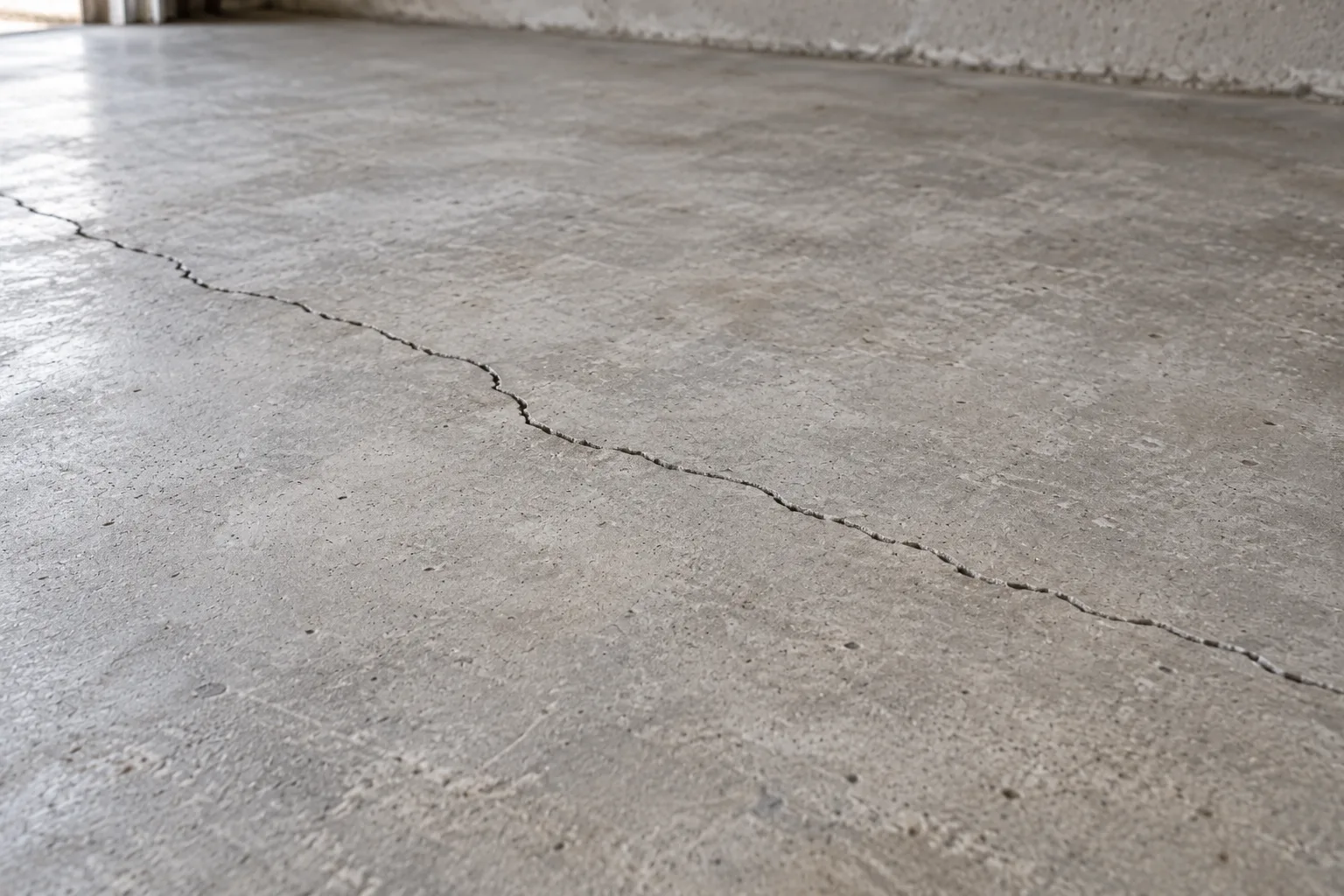
4. Cracks in the slab itself. You'll often see these in a garage floor or under flooring. The Texas guidelines list cracking of concrete foundation parts as a sign of foundation movement, but also say most cracks don't affect strength. Width, length and whether it's growing tell the story.
Some clues apply to every kind:
- Size. HUD's housing inspection standard flags a foundation crack that's 1/4-inch or wider and 12 inches or longer.
- Clean or dirty. HUD's guide says a clean crack points to recent movement, while a dirty or painted-over one may be old and inactive.
- Age of the house. The same guide says a 1/2-inch crack in a new building may mean rapid settlement. In a building 50 years old, it may mean movement of only 1/100 of an inch a year. In a city of young homes like New Braunfels, that makes a wide crack worth taking seriously.
- Change. A crack that grows, or keeps coming back after it's patched, is the clearest sign of movement.
Four common kinds of crack
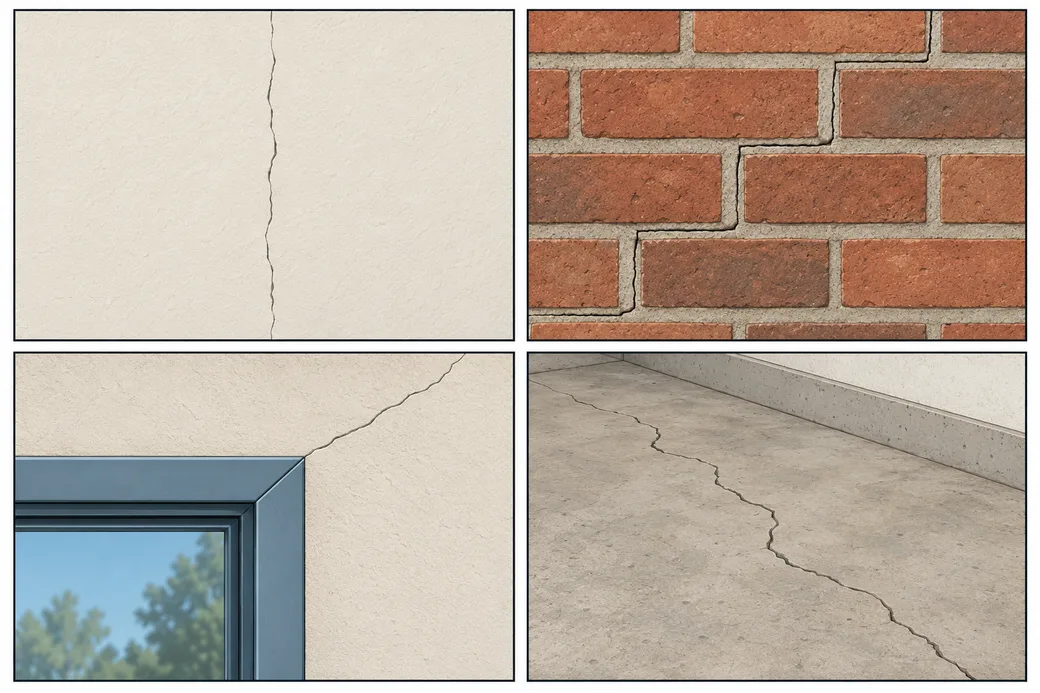
- Hairline crack in a painted wall
- Stair-step crack along brick or stone mortar joints
- Diagonal crack from the corner of a window
- Crack across a concrete floor
How Crack Repair Works, Step by Step
1. Measuring and watching. Mark both ends of the crack with a pencil and the date, and note its width. HUD's guide mentions crack monitors you can buy that show movement over time, and warns that a full round of seasonal movement can need half a year or longer.
2. A closer look if it's moving. If the crack is growing, an inspection with floor measurements will show whether part of the house has dropped. Our foundation inspection page explains what a good one covers.
3. Fixing the cause. If the house is moving, the crack is a symptom. The fix is slab foundation repair, pier and beam repair, or work on the water that's moving the soil.
4. Sealing the crack. Once the cause is handled, or if the crack was only cosmetic, it can be filled and finished. In New Braunfels, cosmetic work doesn't need a building permit, but foundation repair does.
Foundation Crack Repair on Clay and on Limestone
On the clay side, cracks breathe with the seasons. Branyon clay, the most common soil in New Braunfels, reads very high for shrink and swell from about a foot down to past 6 feet. As clay dries through late summer, it shrinks back from the edge of a slab, and HUD's guide says seasonal movement makes some cracks open and close.
A crack that opens each summer and narrows each spring is moving with the ground; seal it without fixing the moisture and it often needs sealing again.
On the limestone side, the ground is far steadier. Comfort soil has bedrock about 13 inches down, and Rumple about 28 inches. A crack that keeps growing there points to water first: a slab leak, a downspout at the wall, or a low spot that holds rain.
What Foundation Crack Repair Costs
For a cosmetic crack, published prices are modest. A national franchise's San Antonio office lists crack repair at $300 to $800. A New Braunfels-area company says repairing a small crack in a slab may cost around $500 to $1,000.
If the crack is a symptom, the real cost is the repair behind it, and our foundation repair cost guide covers those quotes.
Why Use Us for Crack Repair
We're a referral service, not a crack repair crew. Your request goes to one independent foundation repair pro who works your part of the area. That pro checks the crack, says whether it's moving, and quotes any repair. The inspection is free and you never pay us; the pro may pay us for the request, as our disclosure explains.
Foundation Cracks: Your Questions
Should I seal the crack right away?
Not yet, if you can wait. Mark it and watch it for a while first. HUD's guide says a clean crack points to recent movement, and sealing it hides that clue. If the crack lets in water or pests, a temporary seal is fine. Just photograph and measure it first.
Do I need a permit to repair a crack in New Braunfels?
Not for cosmetic work. The city says redecorating and minor repairs don't need a building permit. If the fix involves the foundation itself, such as piers or a lift, it does need a permit, pulled by a registered contractor.
Towns We Serve
We serve New Braunfels and nearby towns, including Seguin, San Marcos, Kyle, Canyon Lake, Garden Ridge, Schertz, Cibolo, Selma, Universal City, Live Oak and Converse. See all service areas.
Get a Free Crack Inspection in New Braunfels
Let us know where the crack is and how long you've noticed it, and we'll pass it to a foundation repair professional who works in your area. They'll take a look and talk you through what they find. You pay nothing for the visit, and you're under no obligation.
Tell us what you're seeing