
New Braunfels, Texas · Free inspection
Foundation Inspection in New Braunfels, TX
A free look from a local pro, and what a thorough foundation inspection should cover.
A foundation inspection tells you if your house is moving, how much, and what to do about it, if anything. A good one measures the floors, not just the cracks, and explains what it finds in plain words. If it finds settled sections, the next step is usually slab foundation repair.
Tell us what you're seeing
- Free inspectionIt costs nothing
- No obligationStopping after the inspection is fine
- Town-by-town soil dataFrom the USDA soil survey
- You never pay usNo fee for using this site
- Call (830) 500-5898Or send the short form
If you're worried about a crack or a sticking door, an inspection is the calmest next step. It swaps guessing for numbers. In New Braunfels, one street can sit on deep clay and the next on thin soil over limestone, so real numbers help even more.
When You Need a Foundation Inspection
It's worth getting the floors measured when:
- A crack is growing, or keeps coming back after it's patched
- A door or window that used to work fine starts to stick or swing
- You can feel a slope or a dip when you walk across a room
- Cracks in brick or stone that are wider at one end
- You want your own numbers before a repair quote
- Something changed after a long, dry summer
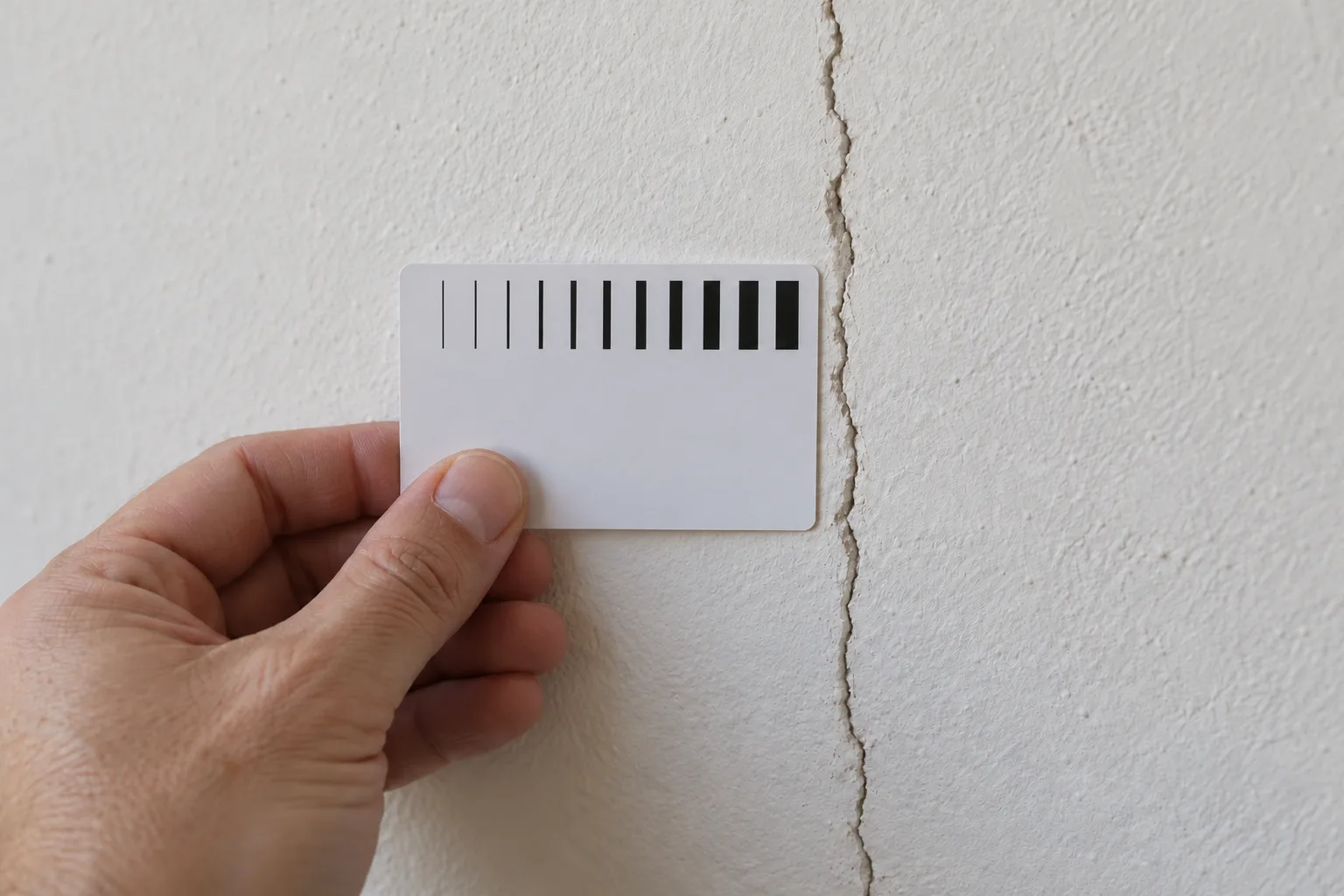
HUD's housing inspection standard flags a foundation crack that's 1/4-inch or wider and 12 inches or longer. If you have one like that, don't wait for it to get worse. If your cracks are smaller, an inspection can still tell you whether they're moving.
What an Inspection Involves, Step by Step
The guidelines Texas engineers use describe three levels of inspection. They make a handy checklist, whoever comes out to your house.
Level A, first impressions. The inspector asks what you've noticed, looks at any papers you have, and walks through the house looking for signs. The guidelines call this a report of first impressions.
Level B, measured. All of Level A, plus floor heights measured across the house and drawn to scale, the survey that house leveling and crack repair plans start from. The report says how much the floor bends and tilts, and how that compares with accepted limits. This is where you start to get real numbers.
Level C, tested. Level B plus tests picked to fit the house. The list includes soil samples, plumbing leak tests, tests of the concrete and steel, post-tension cable tests and a survey of nearby trees.
The guidelines also say an engineer should come in person. You and the engineer should agree on what the job covers. Reading someone else's report without a visit is a second opinion, not an inspection.
Who Does the Inspection, and Why Use Us
There are two good routes, and they suit different situations.
A foundation repair pro will usually inspect for free. That's the route we can help with. We're a referral service, not an inspector: we pass your request to one independent pro who works in your area, and they come out to take a look. You never pay us.
A structural engineer usually charges for the visit, but isn't selling the repair. The Texas guidelines, with their three levels, are written for engineers. You can also do both: start with a free inspection, then bring in an engineer if a big repair is on the table. Our guide on whether to call an engineer or a repair company first walks through when each one makes sense.
Whichever route you choose, it's fair to ask for:
- A map of the floor heights, not just an opinion
- Photos of the cracks, with their width and length
- Which soil they think the house sits on
- Whether plumbing leaks were checked or ruled out
- What they'd expect to see if the house is still moving
Inspections on Clay and on Limestone
On the clay side, one inspection is a snapshot. The Texas guidelines say a single floor survey shows the foundation at one moment and may not be enough on its own. Surveys repeated over months or years show change.
That matters on Branyon clay, where the USDA survey finds a very high shrink-swell layer to past 6 feet. A house there can rise and fall with the seasons, and HUD's inspection guide says seasonal movement can need half a year or longer to measure. A survey after a dry August and another after spring rain can tell you a lot.
On the limestone side, with bedrock about 13 inches under Comfort soil and 28 inches under Rumple, there's much less ground to shrink. If a house there is moving, a good inspection looks hard at water: plumbing leaks, roof runoff and drainage. That's where Level C plumbing tests earn their keep.
Our guide to New Braunfels soil shows how to look up your lot before the inspector arrives.
What a Foundation Inspection Costs
The free inspections on this site come from local repair pros, with no obligation. An engineer usually charges, and the fee will depend on what you ask for. Ask for the fee and the level in writing before the visit, so you know whether you're getting first impressions or a measured survey.
If your house is new, ask the builder or the city for its project record. A 2022 city notice says New Braunfels asks for an engineer's letter on the foundation while a new home is being inspected. That letter could help whoever looks at the house now.
Foundation Inspections: Your Questions
Is the free inspection really free?
Yes. The inspection costs you nothing, and you're under no obligation to hire anyone. The professional may pay us for passing on your request, which our disclosure page explains.
Should I fix the crack before the inspection?
No. Leave it as it is. HUD's inspection guide says a clean crack points to recent movement, while a dirty or painted-over one may be old. Patching it first hides that clue.
Is there a way to spot a post-tension slab?
Often, yes. Many post-tension slabs carry a stamp, often in the garage floor, and round patches along the slab edge can cover the cable ends. Our post-tension slab guide explains what to look for.
Towns We Serve
We serve New Braunfels and nearby towns, including Seguin, San Marcos, Kyle, Canyon Lake, Garden Ridge, Schertz, Cibolo, Selma, Universal City, Live Oak and Converse. See all service areas.
Get a Free Foundation Inspection in New Braunfels
Let us know what you've noticed, and we'll pass it to a foundation repair professional who works in your area. They'll take a look and talk you through what they find. You pay nothing for the visit and owe no one a job.
Tell us what you're seeing